There are lots of images of Nathan Hale that have him looking like a middle-aged fellow, and then there are others that have him looking like some kind of idealized young man, with a prominent jaw and youthful good looks.
The fact is, nobody today is 100% sure what he looked like, because no contemporaneous images of him have been found. The best we have is a description written by a fellow soldier of his, Lieutenant Elisha Bostwick. Bostwick wrote:
I can now in imagination see his person & hear his voice—his person I should say was a little above the common stature in height, his shoulders of a moderate breadth, his limbs strait & very plump: regular features—very fair skin—blue eyes—flaxen or very light hair which was always kept short—his eyebrows a shade darker than his hair & his voice rather sharp or piercing—his bodily agility was remarkable. I have seen him follow a football and kick it over the tops of the trees in the Bowery at New York, (an exercise which he was fond of)—his mental powers seemed to be above the common sort—his mind of a sedate and sober cast, & he was undoubtedly Pious; for it was remark’d that when any of the soldiers of his company were sick he always visited them & usually Prayed for & with them in their sickness.
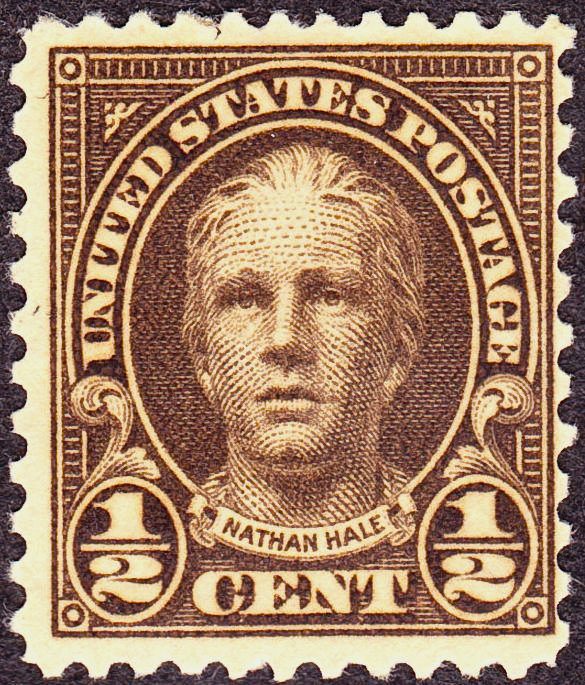
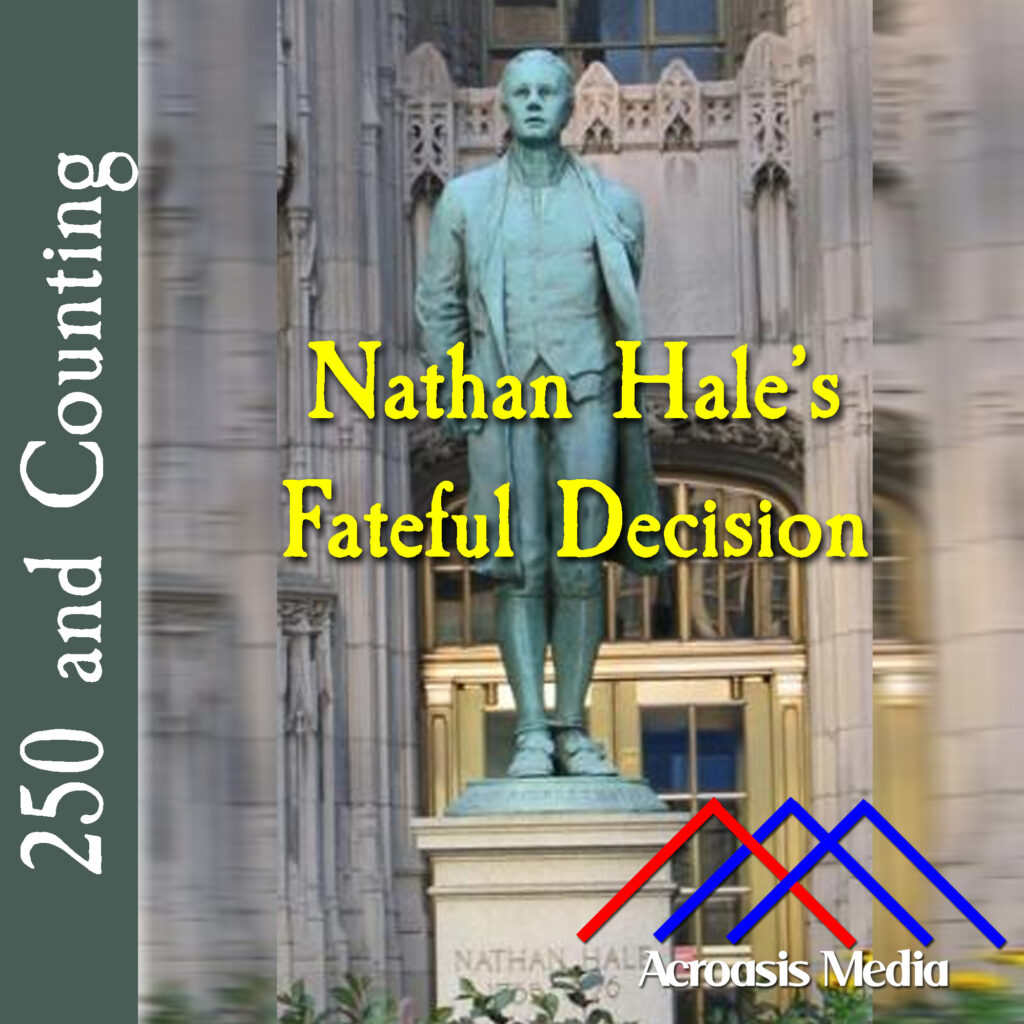
Hale was twenty-one years old in 1776, so the images of him as an older man are almost certainly incorrect. The statue used in today’s cover art is one of several copies cast in 1912 from a sculpture by Bela Pratt. (Baltimoreans note: Bela Pratt was a distant cousin of Enoch Pratt, the man who founded the city’s libraries.) In addition, Pratt’s sculpture was the model for two postage stamps issued in 1925 and 1929.
We know nowadays that Hale’s efforts to infiltrate the British didn’t work out very well, and Mike and I will return to his story in a few days to tell you specifically how it shook out, and a long-standing controversy over his last words—what did he say, and how did he say it?
Podcast: Play in new window | Download | Embed
Leave a Reply